Test First, Sparkle Later: Why Colour Patch Tests Deserve a Diary Slot
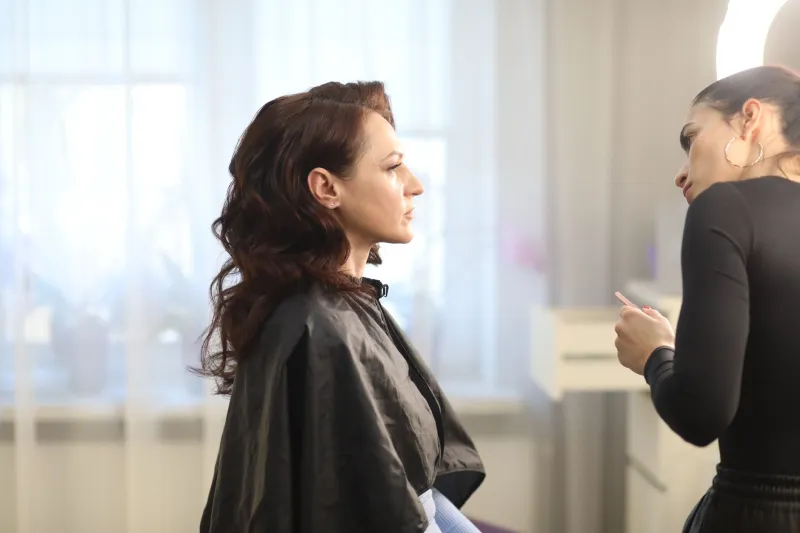
November arrives and the diary fills up fast: the office Christmas do, the friends' dinner that keeps getting moved, the Boxing Day walk you'll want good hair for. Somewhere in there is a colour appointment. And somewhere before that is the small, unglamorous step that can protect the whole plan: the patch test.
It sounds like paperwork. It can feel like an extra trip. But if you're booking colour in party season 2026, it's worth giving it a proper diary slot rather than hoping the salon forgets to ask.
Why your salon isn't being awkward
A patch test is a safety check, not a personality test. UK salons are advised by colour manufacturers and their insurers to test before certain colour services, particularly oxidative dyes and lighteners. The idea is simple: a tiny amount of the product goes on your skin, usually behind the ear or in the crook of the elbow, and stays there for 48 hours. If your skin reacts, you find out before the full service rather than after.
The ingredient most often discussed is PPD, a dye found in many permanent and some semi-permanent colours. There are others too, including other dye compounds and the persulfates used in bleach. None of this means colour is dangerous for everyone. It means the body can change its mind.
Which brings us to the phrase every stylist hears: 'I've always been fine before.' You probably have. But an allergy can develop after years of exposure. Your immune system doesn't send a memo. It can be fine for a decade and then decide, on a random Thursday, that it has had enough. A previous colour is not a guarantee for the next one.
What actually happens during the test
Usually it's quick. Your stylist mixes a small amount of the colour or lightener they plan to use, applies a dot to clean, dry skin, covers it with a plaster or tape, and sends you on your way. You keep it dry for 48 hours. No swimming, no long steamy shower directly on the patch, no scratching it to see what happens.
Some salons charge a small fee; many don't. Some will do two tests if you're having more than one product, for example a base colour plus a high-lift tint. Ask what's being tested and when you should remove it. If you react before the 48 hours are up, remove it, wash the area gently with lukewarm water and mild soap, and contact the salon.
A positive reaction can look like redness, itching, swelling, a rash or, in more serious cases, blistering. If you have swelling away from the patch, trouble breathing, or feel unwell, seek urgent medical advice. In the UK, that means NHS 111 or A&E if symptoms are severe. Do not proceed with colour just because the party is on Saturday.
The last-minute party maths
The rule is generally 48 hours before your colour appointment, not 48 hours before the party. So if your colour is booked for Friday, the test needs to happen on Wednesday. If the party is Saturday and you're colouring on Thursday, test on Tuesday. It feels early. It is meant to.
If you're a regular client who hasn't been in for six months, expect to test again. If you've had a reaction to anything since your last visit, say so. If you've had a black henna temporary tattoo, mention it, because those can contain high levels of PPD and can make future reactions more likely. If you're pregnant or breastfeeding, tell your salon; it doesn't automatically mean you can't have colour, but it's part of the conversation.
The practical bit: when you book your colour, book the test at the same time. Put it in your phone with an alarm. Don't leave it as a 'pop in on the day' job, because the day is exactly when it can't be done. Most salons can fit a test around a normal working day. It's a ten-minute appointment, not a full afternoon.
If the test shows a reaction
Don't ignore it, and don't assume a different brand will be fine. Take a photo, note the product if you know it, and speak to your salon. They may adjust the formula, switch to a different type of colour, or advise you to see a doctor or dermatologist for proper allergy testing. What they won't do, if they're responsible, is colour your hair anyway and hope for the best.
It also helps to think about your backup plan before you need one. If colour is off the table, could you have a gloss, a cut, or a styling appointment instead? A patch test that rules out colour is disappointing, but it's a lot less disappointing than a scaly, itchy scalp in every party photo.
The small step that keeps the big plan intact
Party hair should feel like a treat, not a gamble. The patch test is the least glamorous part of the process and the easiest to skip when you're busy. But it's also the bit that protects your scalp, your appointment and your festive diary. Book it when you book the colour. Keep it dry. Turn up. Then get on with the sparkle.