The Group Shot Edit: Festive Hair That Doesn’t Flinch at Flash
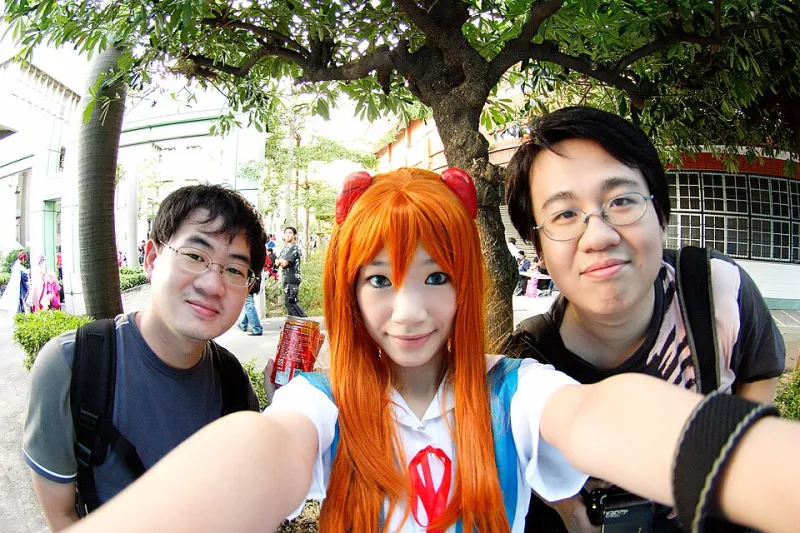
Photo: MiNe, CC BY 2.0, via Wikimedia Commons
There is a particular kind of festive disappointment that arrives at 11pm, when someone posts the office party photos and you realise your hair has done something entirely different from what the salon mirror promised. In real life it looked glossy and full of movement. In the group shot it looks flat at the roots, suspiciously shiny across the forehead, and oddly dusty near the parting. Nothing has gone wrong with your hair. The phone flash has simply told the truth about your product placement.
Festive 2026 is going to involve a lot of low-light rooms, overhead lighting, camera flashes and group photos taken at close range. That is a different environment from the salon, where lighting is flattering and you can see your hair from every angle. Treat the phone camera as the final fitting. A few small adjustments before you leave the house can make the difference between hair that looks nice and hair that photographs deliberately.
The salon mirror is not the party
Salon lighting is designed to make colour and shine look their best. Party lighting is designed to make everyone look a bit mysterious, which is lovely until someone uses flash. Flash is harsh, direct and unforgiving. It highlights texture, catches flyaways, bounces off oil and can make certain setting products look chalky.
That does not mean you need a complicated routine. It means you need to think about where your products land. A style that feels beautifully conditioned in the chair can read as greasy at the front hairline under flash. A style that feels perfectly set in the salon can look powdery at the roots in a photo. The fix is usually placement, not more product.
Put product where the camera can’t catch it
The front hairline, the crown and the parting are the areas most likely to catch flash. Keep heavy oils, serums and shine sprays away from those zones unless you are deliberately going for a wet-look finish. A lightweight serum pressed through the mid-lengths and ends gives movement without turning the top of your head into a reflector.
If you use hairspray, hold it further away than feels natural and let it settle rather than soaking one section. A fine mist keeps the style in place; a heavy layer can look crisp and slightly dusty in photos. If you are using dry shampoo for volume, brush it through properly. Any white residue that looks invisible in your bedroom mirror can flare up under flash, especially on darker hair.
For smoother styles, a small amount of styling cream or a light smoothing balm through the mid-lengths helps control flyaways without weighing down the root. Apply it to your hands first, then skim the surface of the hair. Do not start at the scalp. The goal is to look polished, not product-heavy.
Shine is good; glare is not
There is a difference between healthy shine and camera glare. Healthy shine follows the curve of the hair and looks soft. Camera glare is a bright patch that pulls attention to one spot, usually the forehead, the crown or the top of a sleek ponytail.
If you have a glossy finish you love, keep it through the mid-lengths. If you want to reduce glare at the front, a light blotting paper around the hairline can help before photos. Do not attack your hair with powder unless you know how it behaves on your hair type. A translucent finishing powder can work for some people, but it can also dull dark hair or leave a visible cast. A clean tissue pressed gently along the hairline is a safer first move.
Styles that hold their own in a group shot
Group photos are not the place for a style that only works from one angle. You want shape around the face, a bit of height or texture near the crown, and a finish that still looks like hair rather than a helmet.
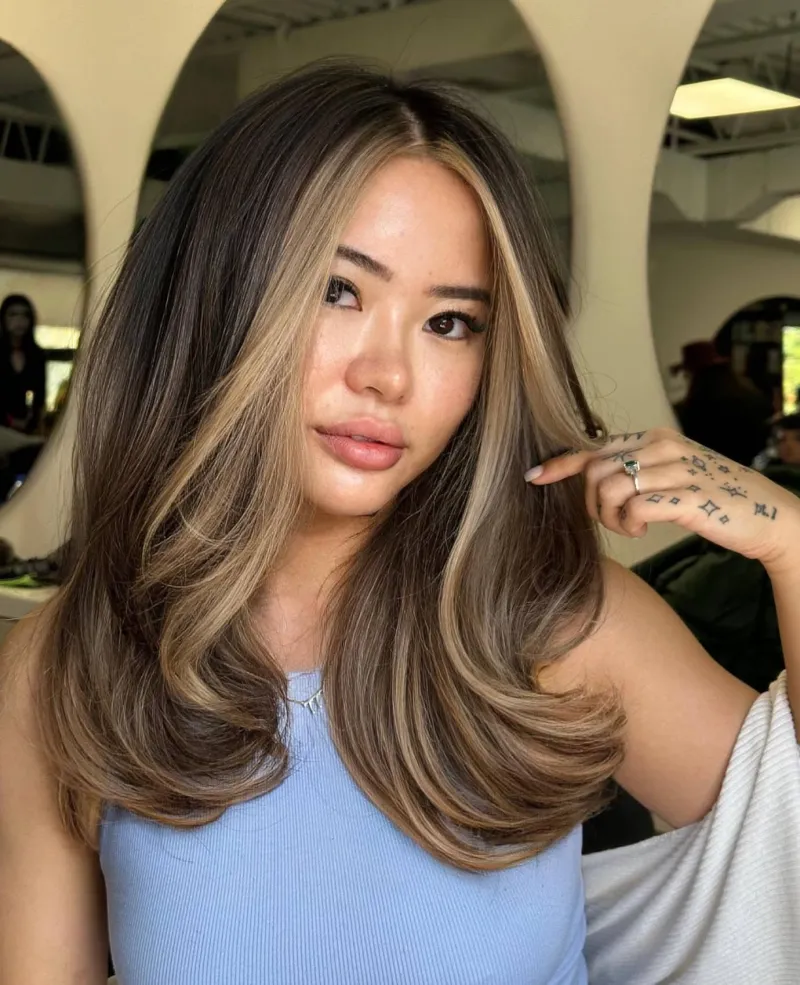
A low, sleek ponytail with a centre parting photographs well because it keeps the face open and the silhouette clean. Add a slight lift at the crown if your hair is fine, but keep the sides smooth. Loose waves with one side pinned back are another reliable option: the movement breaks up the flash and the pinned side keeps the face visible. A textured bob or shoulder-length cut with a soft bend through the ends also works well in crowded shots, because it has shape without needing constant adjustment.
Avoid styles that rely entirely on height at the back, because a group photo often crops the top of your head or hides the back completely. Avoid a heavy fringe if you know you will be photographed straight-on under flash. A soft curtain fringe or a slightly parted fringe is more forgiving. If you are wearing glasses, keep the hair around the temples smooth so the frames do not compete with flyaways.
The five-minute hallway check
Before you leave, find a hallway or bathroom with a mirror and your phone. Turn the flash on, switch to the front camera and take three photos. One straight-on from roughly arm’s length, one slightly above eye level, and one from the side. Do not judge your face; judge your hair.
Look for four things. First, white cast at the roots: that is usually dry shampoo or setting spray. Second, shine patches at the front hairline or crown. Third, flyaways that stand out against the background. Fourth, whether the style still has a shape you recognise. If something looks off, fix that one thing. Do not restart the whole style five minutes before you leave.
A quick smoothing pass with a tiny amount of cream, a brush through the roots, or a pin to secure a section is usually enough. Take one more photo. If it looks good on a phone flash at close range, it will almost certainly look good in the pub, the restaurant or the office party.
The touch-up kit that earns its place
You do not need a full salon kit in your bag. A mini hairspray, two pins, a small comb and a couple of blotting papers will handle most festive emergencies. Add a tiny amount of serum in a travel pot only if your hair tends to frizz in the warm, crowded rooms that December seems to specialise in.
Keep the kit small enough that you will actually carry it. The best party hair is not the most complicated hair. It is the hair you stop thinking about once the photos start. A little flash-first planning means you can enjoy the group shot instead of quietly worrying about your roots.